
One’s income is not working together. Most is being transferred away, and One is left with the remaining portion to increase One's' financial position. The transferred portion can be as high as 74%. Meaning that $.74¢ cents of every dollar One earns, One only benefit from it once. One’s income is being diluted with the expectation of returning strong returns. One does this by using One’s earned income collectively. A question that may come to mind is: “What or whose income can One use?”. One is likely familiar with the term OPM or Other People’s Money. One can include and consolidate One's earned income and leverage.

This is:
CRITACL
For:

AI PREPARED EXCLUSIVELY FOR OWNER OF:
Purchasing a house is an exciting endeavor. Yet, ownership is not fully realized until the final mortgage payment is satisfied. In full transparency, what One is purchasing via the current purchasing process is a liability. That statement is not to be meant as a negative as are any words included.
"Misdirection: What the eyes see, and the ears hear, the mind believes." -Harry Houdini
Artificial Intelligence (AI) defines a liability as: “a financial obligation or debt that an individual or entity owes to another party, typically as a result of past transactions or events. Liabilities represent claims on an entity's assets and require the entity to fulfill these obligations by providing goods, services, or cash payments to the creditors or individuals to whom the liabilities are owed”.
One now owes the financial institution the price One agreed to pay the seller for the home plus the interest that One agreed to pay the financial institution for the use of the financial institution’s income (money) for One’s purchase. One has also entered into an agreement to pay taxes and insurance that effectively pays 0% in claims. Financing the home is either the only option on the journey to becoming a homeowner or One understands how using other people’s income (money) works and its benefits. One is the former until One understands the latter. Reverse the narrative.
"It's not how much money One earns, but how much One keeps, putting it works for One and how many generations One keeps it." -Robert Kiyosaki
The GREAT Sale!!
The purchase of a house has been sold as the “American Dream”. As an investment, whose? When AI is asked “What is an investment”, its reply is:
"An investment refers to the allocation of money or resources with the expectation of generating income, profit, or appreciation in value over time. The primary goal of investing is to increase wealth or achieve specific financial objectives. The goal of making an investment is to grow or increase the value of the initial capital over time." .
"…increase the value of the initial capital over time" is not a guarantee in purchasing a house. One is a “housecropper™”. One that lives on a piece of land and in a shelter that One will never own. It is One's on paper. The value is impacted by the market. The “capital” is locked up in what is referred to as “equity”. Whose? One can only access it by borrowing against the equity credited or selling it and no longer "owning it" with approval from a bank. What is the “dream” in that?
Following the current purchasing system, One’s house is not an investment. One’s house, as stated previously, is a liability. Yet there is another option for consideration. It's CRITACL.

Upon paying off One's mortgage, One will get an immediate tax-advantaged cash flow of which is the equivalent of a taxable income of and % of One's projected income of ( % tax bracket) at the time that One pays off One's mortgage based on an annual income increase of 3%.
One has entered into a contract in which One has agreed to exchange which includes the closing price of the purchase and the purchased interest that One incur for using someone else’s income at a cost of per month . This income is obtained from a pool of income that may include One’s own in addition to that which belongs to others in the form of deposits in a bank. One has probably heard that losses occur in the market when in fact what occurs is a transfer of income to some-One else. There are never any losses, only transfers. Of the , is the closing price that One agreed to as the purchase price for the house. Additionally, One agreed to purchase approximately in interest. This is where the transfer of wealth occurs in every purchase that One makes during One’s lifetime. This is the thesis of what follows (The Thesis to Wealth: Never spend the income (principal) that One earns from One’s labor. Leverage.). It’s CRITACL.
One can reverse this trend and Control & Reverse Interest and Taxes & Accumulate Cash & Leverage. It is CRITACL. Imagine purchasing One’s house for $0 while earning over from the purchase and with annual tax-advantaged cash flow of . Additionally, imagine One gaining and retaining control of between and of the income that One labors to earn during the year payment period and that income generating an annual cash flow of between and from the purchase for One that continues to increase year-over-year.
| SCHEDULED DEBT PAYMENT SUMMARY | ||||||||||||||||||||||||||
|---|---|---|---|---|---|---|---|---|---|---|---|---|---|---|---|---|---|---|---|---|---|---|---|---|---|---|
|
 Imagine One earning interest on the same dollars that One is using to purchase One’s house and pay interest as One use to purchase
One’s house to earn interest. In reality, this is actually achievable. It is likely that One has not given it any consideration,
nor has it been brought to One’s attention as purchasing the house is the only part of “The Complete Package Of Achieving The
American Dream” that is shared with One. The information contained within this "Trojan Horse" proffer is just a snippet as to what
One gains by doing so as it would take a book to go into more detail. (One can request a copy by texting "Digital" to 678.516.3316.)
"The mind is like a parachute. It works best when open." -Thomas Robert Dewar
Based on One’s estimated closing date of and home purchase price, , One has already given away more than in accumulated mortgage income payments and more than in potential earned interest based on the APR in the year purchased of %. With the additional average annual fees and charges of % embedded within the APR of %, One is currently on track to give away away, at minimum, between and of the value of the dollars that One labors to earn which includes the principal dollars via the payments that One is scheduled to make in the purchase of this house and guaranteed to earn ZERO. ZERO. The embedded fees are the average annual interest rate on the loan calculated by dividing the interest charged each year by the total mortgage payments made each year. The interest () that One has already given away is likely more than the cost of reversing this common trend and even that cost is absorbed. Consider another 10 to 20 years after One has made One’s last mortgage payment and the principal and earned interest amount increases to between and , respectively. This is of significance to One’s legacy.
"Planting trees under whose shade One does not expect to sit." -Nelson Henderson
Question: Will One knowingly give away between and of the income that One and One's income can earn during One’s mortgage payment years? If so, One can stop reading hear, and One appreciates One taking One’s time to read this far. One certainly believes that if One knows One that can benefit from this information that One share the address in the address bar.
Asset Accretion: Periodic increase in an asset’s value due to time-based factors.
| ACCRETION SUMMARY (PRE-PAYOFF) | ||||||||||||||||||||||||||||||||||||
|---|---|---|---|---|---|---|---|---|---|---|---|---|---|---|---|---|---|---|---|---|---|---|---|---|---|---|---|---|---|---|---|---|---|---|---|---|
|
Cash flow can be used tax-advantaged without being "counted" as income and thereby taxable. This is what is meant by tax-advantaged. If one has children that persue higher education, the cash flow does not have any affect on qualifying for financial support. It is basically "invisible". Additionally, the available cash flow increases each year.
| ACCRETION SUMMARY (POST-PAYOFF) | ||||||||||||||||||||||||||||||||
|---|---|---|---|---|---|---|---|---|---|---|---|---|---|---|---|---|---|---|---|---|---|---|---|---|---|---|---|---|---|---|---|---|
|
| COMBINED ACCRETION SUMMARY | ||||||||||||||||||||||||||||||||||||||
|---|---|---|---|---|---|---|---|---|---|---|---|---|---|---|---|---|---|---|---|---|---|---|---|---|---|---|---|---|---|---|---|---|---|---|---|---|---|---|
|
Effective APR (net Cost) is what a loan really costs when factoring in:
• How many years it is kept
• How much total interest is paid
The banks APR on paper (%) never changes. Yet with a different structure, the same loan can be made to be perform more efficient in reality. Potentially saving
tens or hundreds of thousands of dollars.
 Take notice of the CASH FLOW line item. This income during One's' retirement years offers several significant benefits, particularly in financial stability, flexibility, and
security. Here’s a breakdown of the main advantages:
- Tax-advantaged to access without any effect on One's supplemental income streams such as social security.
Take notice of the CASH FLOW line item. One's mortgage payments will provide One with an annual cash flow without the need to get approval from a bank. This cash flow can be used to supplement One's expenses without needing to get permission or taking on extra debt. It can be used at One's discretion. One will be in a better position not only to meet One's financial needs. One will be able to pass on a legacy to the next generation.
Yet, if One is is okay with giving away One's income, if One knows of One that can benefit from earning more from the income that One labors earn, do that One a favor and share this link critacl.com/CRITACLProffer. It allows One to include more areas of One’s income as considerations (i.e., escrow income payments and equity). These are One’s income that can be leveraged by One.
Each One reach One.
Sincerely.

Most view purchasing a home as One’s largest purchase and investment. One disagrees. One’s largest purchase is actually One’s income. It is purchased with One’s time. Everything that One purchases is from the income that One labors to earn from One’s time. Time is one of One’s most valuable resources. It is not something that One earns more of. Yet One can leverage time to earn more from One’s income and trade money (income) for time as One’s income is replenished with the income earnings from the income that One has labored and is laboring to earn. One is trading time for money (income) versus trading money (income) for time. One is going to run out of time first.
"Those who work the whole day, have no time to earn money (income)." -John D. Rockefeller
Depending on how long One has to settle a liability determines whether One’s purchase was a “dream” realized. Homes do not pay for themselves. They require One to make the payments. That may appear to be the obvious, yet sometimes the obvious is not so obvious. Purchasing a house is labeled as an investment. Whose?
AI refers to an investment as:
"The allocation of money or capital into assets or instruments with the expectation of generating future income or profit while preserving or growing invested capital".
AI defines preserving as:“protecting, maintaining, or conserving something to keep it in its existing state or prevent its loss, decay, or destruction”.
At a minimum, the “purchase” of a home is speculation, though debatable. When One is freely giving away One’s income, One is not preserving it thereby not leveraging the opportunity to grow it.
Based on the purchase price of One's home of , over a -year period, One is scheduled to pay approximately in amortized interest based on a % interest rate for a total of for this purchase.
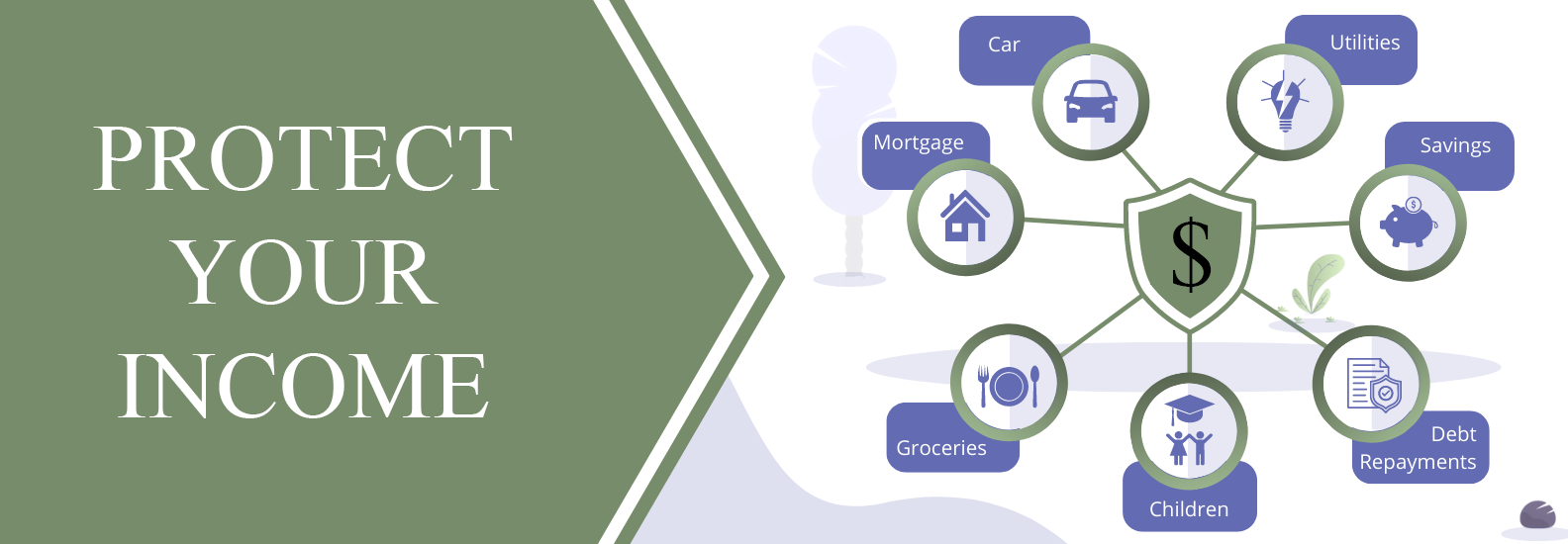
Yet One can reduce One’s scheduled amortized interest amount to $0 and ultimately $0 for the purchase price of the home. One read that correctly. That is not a typo nor error in calculation. Zero ($0) in amortized interest and zero ($0) in principal payments. All mortgage payments are converted to deposits, and One earns interest on those deposits and then use One's earned capital to reduce One's principal owed. This may seem simialr to making extra payments. Yet there is a significant difference. One is not losing control of One's principal. One's principal is being retained to earn more capital to "rinse and repeat". Those are not the only benefits.
"Nothing is more expensive than a closed mind and a missed opportunity" – H. Jackson Brown Jr.
An unknown for the majority of individuals is the income that One is transferring away as well as the income (equity) that One is locking up in an effort to “own” the “American Dream”. Ownership is never fully realized as One pays property taxes for as long as One is considered the “owner” of the property. However, One can offset One’s “owner” costs.
A typical way in which One accesses One's equity is via a Home Equity Line Of Credit (HELOC). Yet this is contingent upon One having a source of income. That seems reasonable unless One finds Oneself in a position where One does not have a source of income. This is more common during the period referred to as retirement yet does occur earlier due to reasons beyond One’s control or preparedness. What is One to do? It's CRITACL!
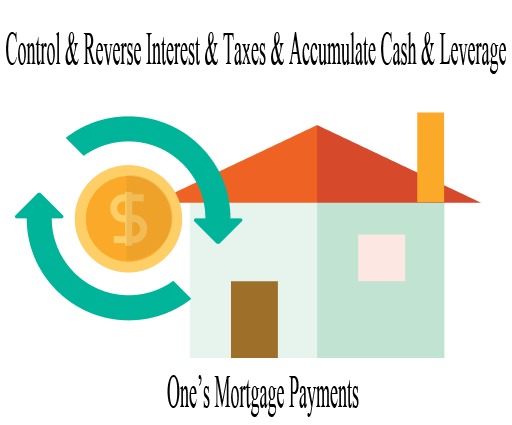
Control & Reverse Interest and Taxes & Accumulate Cash & Leverage (CRITACL). One of the many benefits of CRITACL is that it can be implemented by One purchasing a home to retain control of the mortgage payment income (principal) that One is making and to earn interest from those same dollars. This interest is not just any interest. It's compound interest. Yet not just any compound interest. It's uninterrupted compounding interest. A well know physicist is credited with saying:
"Compound interest is the eighth wonder of the world. One who understands it, earns it; One who doesn't, pays for it." -Albert Einstein.
CRITACL allows One to retain control of the income that One labors to earn and earn uninterrupted compounding interest on it. This is accomplished by One earning interest from One's mortgage payment(s). One then applies One's capital to One's mortgage. This accelerates One's total principal payment amount and reduces One's total number of payments. For One, based on a mortgage payment of , this is a reduction from remaining scheduled payments and years to months and years. One potentially earns in interest during those years. Adding the principal payments () that One pays and the interest () that One earns during those years reveals a total of which One controls. An amount greater than the purchase price of for the purchase. One's scheduled closing price payment of is reduced to . One's scheduled amortized interest payment of is reduced to . This brings One's total "out-of-pocket" expense to the beginning closing price of of which is interest income earned from One's payments made. That is that One keeps. Although with CRITACL, One keeps all of the income that One labors to earn that is used any purchase that One makes working for One.
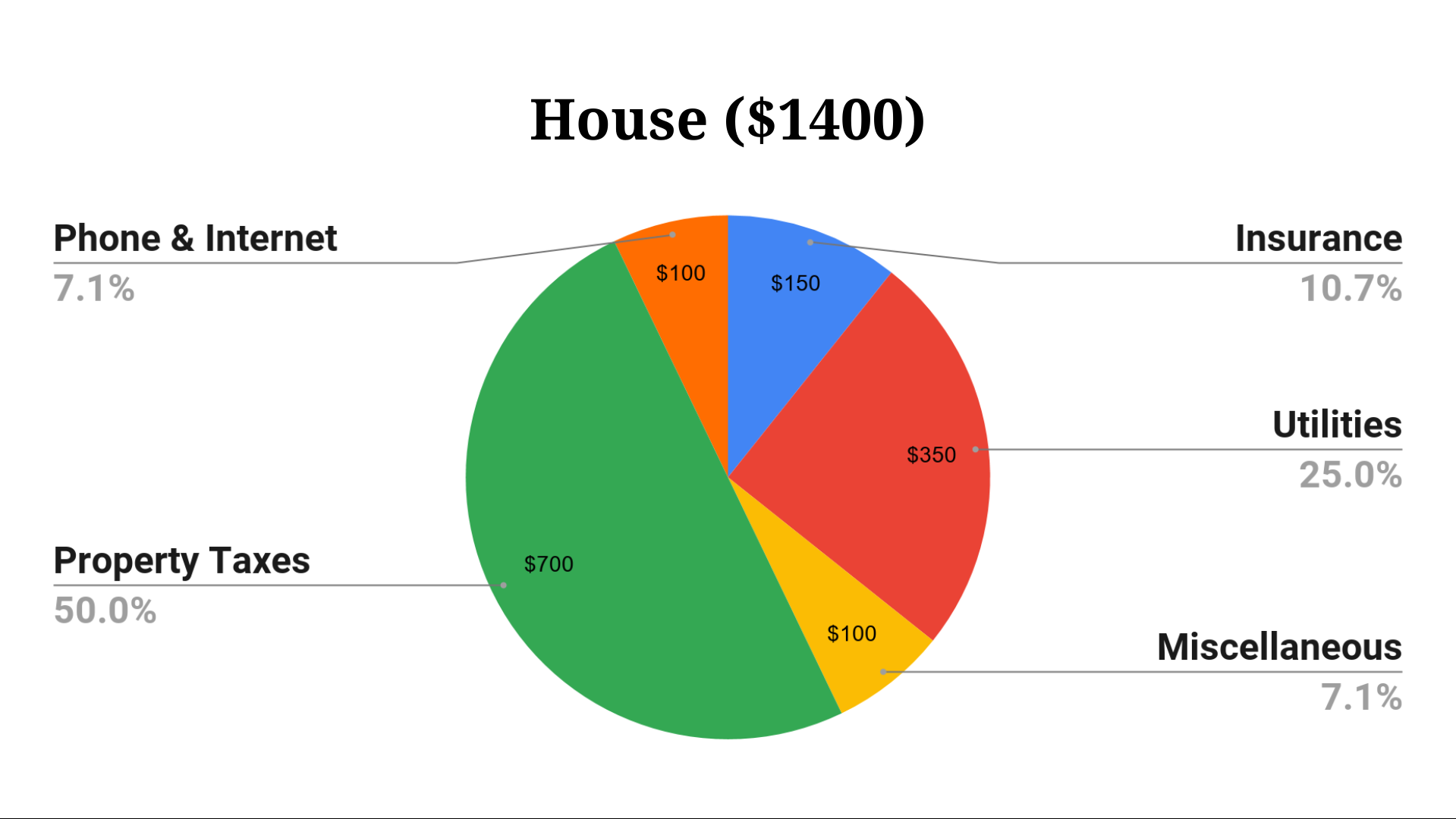 CRITACL also allows One to earn interest on the taxes and other costs that One pays that are wrapped in One's escrow payments. From the
mortgage payment income of the purchase price, , that One is scheduled to make with One's mortgage
payments, CRITACL allows One to earn between and
in interest over the scheduled
years. In total, One accumulates and controls between
and in income implementing
CRITACL. One can also "capital"-ize on the escrow payment income, that One is scheduled to pay in conjunction with One's
mortgage payment income. Leveraging One's full escrow payments income, One further reduces
the number of scheduled mortgage payments that One is scheduled to pay by even more years depending on One's escrow payment income amount.
In estimating One's property taxes, which is one payment included in One's escrow payment, One's annual property taxes are . Using this amount in calculating One's future property tax obligation with a 1% annual increase results in One paying in property taxes that One can earn over in interest over the -year period that One is making payments to purchase One's house. As property taxes will be an ongoing expense as long as One is the "property owner", projecting out ten to twenty years will result in the additional accumulation of between and and additionally contributing to between and annually to One's ever-increasing cash flow, respectively during those years.
With CRITACL, One is on a path to establishing true generational wealth.
Imagine solving a leading concern of many as One gets older of earning income to satisfy a longer livelihood. Imagine the potential cash flow that One receives from controlling One's mortgage payment income together with One's property tax payments to be leveraged during One's life-of-leisure (retirement) years that is projected to be between and annually after One completes making One's mortgage payments. Imagine One's cash flow being tax-advantaged and not having an impact on any other income that One is entitled to during One's life-of-leisure (retirement) years. Imagine ten to twenty years after One completes making One's mortgage payments, One's accumulation being between and , respectively during those years, and One being the recipient of an additional ever increasing cash flow of between and annually, respectively. Imagine what this means for One and One's legacy.
Additionally, One can also activate the equity in One's home into being liquid without putting One's home at risk and increase One's earning from One's purchase greater during and after One's purchase for a projected year-over-year return of 28% per equity dollar. This is an advanced strategy of CRITACL to protect One's equity against market uncertainties as well as keeping all of One's income working for One. It is an Income Equity Line of Credit (IELOC)™. It functions similar to a HELOC with the major difference being the homeowner earns uninterrupted compound interest and incurs negligible interest via leverage. Even if One decides to sell One's home, One will take One's equity with One.
A critical byproduct of CRITACL is allowing One to retain control of all the income that One labors to earn which includes the income used in making One's purchases and earn uninterrupted compounding interest simultaneously.
CRITACL itself is a concept. Any service or financial tool that allows One to:

|
|
|
|
|
|
|
|
|
|
|
|
|
can be used to implement it. In One's research, One has come across only one tool that does. If One would like to hear more, One welcomes the opportunity to answer any questions that One has. Any additional questions do not involve One trying to sell One anything. One's intent is to assist One in becoming aware or more aware of the options that are available to One in understanding One's income and the additional value that each dollar provides One. Another well-known individual is quoted as saying:
"The way to become wealthy is to put all of One's eggs in one basket and then watch the basket." -Andrew Carnegie
*Milestone is the approximate month and year that reversed interest earned is providing enough earnings to pay annual premium.
Click item in legend to toggle visibility a graph line.
"The mind once stretched by a new idea, never returns to its original dimension." -Ralph Waldo Emerson
CRITACL does not follow a large number of strategies that in the process of "getting out of debt", One transfers, as there are never losses, control of hundreds of thousands of dollars of the income that One labors to earn in addition to the power of uninterrupted compounding interest that those dollars earn. CRITACL implements leverage. CRITACL is not something that One purchase. CRITACL is a concept. The CRITACL concept relies on an environment/tool to produce results described. That is what is necessary to purchase. That purchase is a tool that One use to exercise the benefits mentioned under "CONTROLLING, REVERSING, ACCUMULATING AND LEVERAGING".
Imagine making deposits instead of payments with One's mortgage payments and reaping the full benefits of One's income.
This is CRITACL!
To review the full power of the suite of options and benefits that are available incorporating CRITACL's concept and a recommended environment/tool, Click "Schedule Consultation" banner in right corner to schedule a no-obligation consultation.
"The difference between screwing around and science is writing it down." -Adam Savage

"Numbers have a story to tell. It's up to One to give them a voice." -Steven Few
Income Equity Line of Credit (IELOC™) is not an offer that One will hear being offered by a banking institution. IELOC™ is proprietary. It allows One to earn the lost opportunity cost that most lose from spendig the income that One earns versus leveraging the income that One earns for One's benefit. This is not meant as an attack on banks. Banks serve their purpose. It's just likely that it is not to One's advantage when it involves putting One's deposits to work for itself.
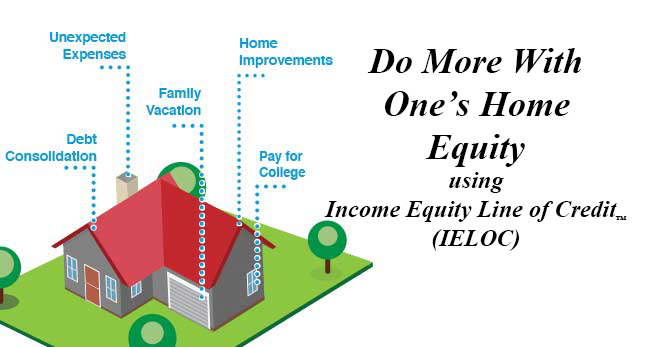
IELOC™ is a concept by which One can warehouse One's equity and create compounding equity. Not just any compounding equity. Uninterrupted compounding equity. The concept is a way for One to simultaneously protect and leverage One's equity without risk.
One's home equity can be leveraged to earn One income without putting One's home at risk. Imagine controlling over from deposits of and in interest earned, a % increase above the () equity that the bank is scheduled to divvy up to One's home and One's home cash flowing One over (equivalent to taxed) annually in One's life-of-leisure (retirement) years via leveraging and the power of uninterrupted compounding interest allowing for One to further reduce the number of years for One to pay off One's mortgage. This is in addition to the deposits accumulated and interest earned from One's mortgage payments.
*Milestone is the approximate month and year that reversed interest earned is providing enough earnings to pay annual premium.
Click item in legend to toggle visibility a graph line.